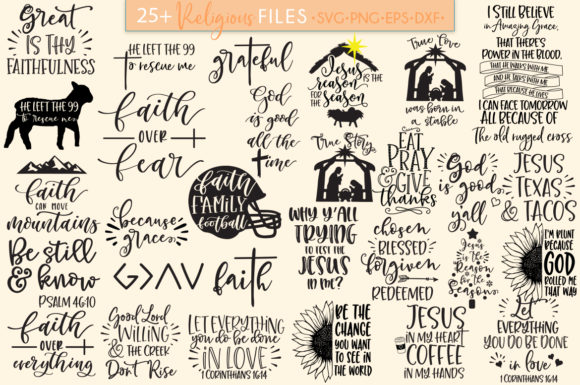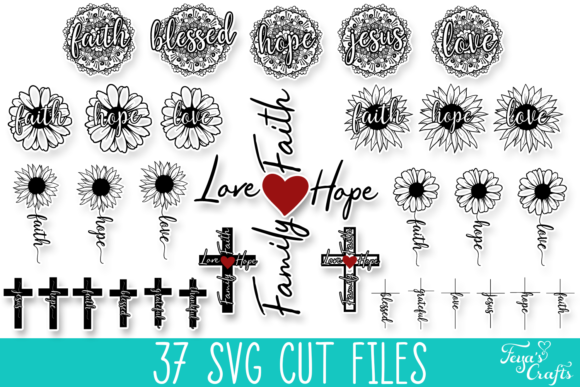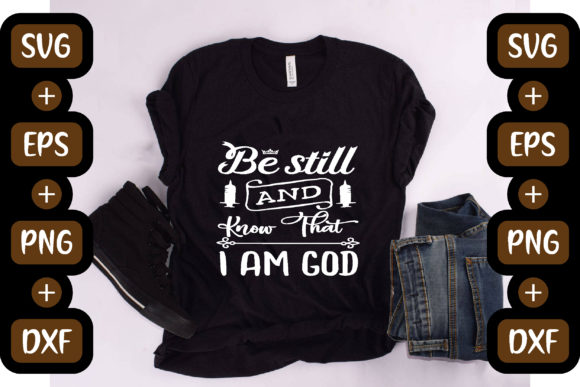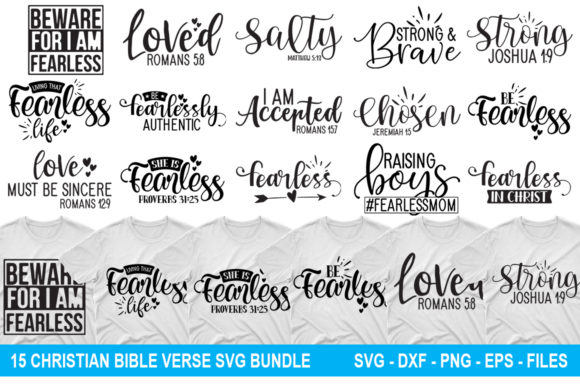
Religious Bundle Graphics for Faith-Based Crafts
When evaluating a new graphic design asset for a client project, my primary concern is always versatility and technical integrity. Recently, I reviewed the Religious Bundle - Christian Designs while preparing a comprehensive rebranding package for a boutique faith-based lifestyle store. This client needed visuals that balanced traditional reverence with modern design aesthetics suitable for both physical merchandise and digital marketing. My assessment focused on whether this specific design bundle could serve as a foundational element across multiple touchpoints without looking generic or technically flawed.
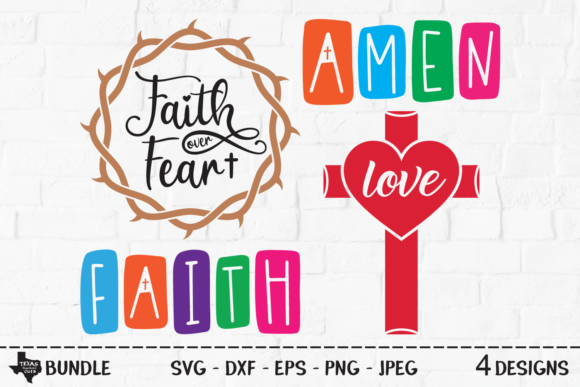
The first impression of this collection is one of clean, intentional artistry. Unlike many religious assets that suffer from overly ornate or dated styling, these illustrations possess a contemporary elegance. The visual mood is serene yet confident, making it immediately applicable for brands targeting a younger demographic or those seeking to refresh their brand identity. For a designer, the immediate value lies in the cohesive style; all four designs share a consistent line weight and artistic voice, which is crucial when building a unified visual system for a small business branding project.
Evaluating Technical Specs for Professional Output
Before integrating any digital product into a commercial workflow, I scrutinize the file structure. This bundle includes 4 SVG files, 4 DXF files, 4 PNG files with transparent backgrounds at 300 dpi, 4 JPEG files with white backgrounds at 300 dpi, and 4 EPS files. From a production standpoint, this coverage is excellent. The inclusion of high-resolution PNGs at 300 dpi is non-negotiable for printable design work; anything less results in pixelation on physical products. I tested the transparency on the PNGs against both dark and light backgrounds in Photoshop, and the edges were crisp with no residual halos, indicating professional digitization rather than automated conversion.
The vector formats (SVG and EPS) are where the real utility emerges for commercial design. While the product notes specify that text is not editable, the illustrative elements are fully scalable. In Adobe Illustrator, the paths were organized logically, allowing me to isolate specific motifs for use as secondary brand patterns. For Cricut project workflows or laser cutting, the DXF files provide necessary compatibility, though I always recommend testing cut lines on scrap material first to ensure intricate details do not tear during production.
Application in Merchandise and Print-on-Demand
For my client’s print-on-demand line, this bundle performed exceptionally well in t-shirt design and tote bag applications. The artwork has enough visual weight to stand alone as a central graphic but remains refined enough to pair with typography. I utilized one of the designs as a primary chest print for a premium apparel line, pairing it with a minimalist sans-serif typeface to create a sophisticated look. The 300 dpi resolution ensured that even when scaled up for adult-sized garments, the ink coverage remained smooth and detailed.
Beyond apparel, these assets shine in packaging design. I incorporated a smaller version of the illustration onto product tags and thank-you cards included with orders. This subtle repetition reinforces visual hierarchy and creates a premium unboxing experience. For sticker design, the distinct silhouettes allow for easy die-cutting, making them ideal for planners, journals, and water bottles. As an Etsy product listing enhancement, these graphics communicate quality instantly, helping digital listings stand out in a crowded creative marketplace.
Digital Versatility for Social Media and Web
In the digital realm, social media graphics require assets that load quickly but retain impact. The JPEG versions with white backgrounds proved perfect for Instagram carousel posts and Pinterest pins where transparency isn't required. However, for web design hero sections and Canva templates, I relied exclusively on the transparent PNGs and SVGs. The ability to layer these illustrations over colored blocks or photography allows for dynamic marketing visuals that adapt to seasonal campaigns. I created a series of promotional banners for an upcoming church retreat using these assets, and they provided the necessary emotional anchor without overwhelming the event details.
For content creators and bloggers, these illustrations serve as excellent editorial accents. They break up text-heavy articles on faith-based topics and provide visual resting points. When used in editorial design layouts, such as newsletters or digital magazines, the artwork adds texture and warmth that stock photography often lacks. The consistent style ensures that even if different designs are used across various blog posts, the overall site aesthetic remains coherent.
Strategic Placement and Visual Hierarchy Considerations
While versatile, this clipart collection requires strategic placement to maintain professionalism. These designs work best in large layout areas, hero graphics, and as focal points. They excel as decorative accents on invitations, certificates, and journal covers. However, designers must exercise caution when using them at very small sizes. Intricate religious iconography can lose definition when reduced below one inch, particularly in sublimation design or embroidery digitization. Always preview at actual print size before finalizing production files.
I would advise against using these assets in highly complex or crowded layouts. Because the artwork carries significant emotional and visual weight, it needs breathing room to be effective. Placing it atop busy patterns or low-contrast backgrounds diminishes its impact and harms readability. For logo design, these should function as supporting icons or brand marks rather than the primary logotype itself, especially since the text within the files is static. They are perfect for establishing tone in brand identity systems but should be balanced with custom typography to ensure trademarkability.
Essential Pre-Flight Checks for Designers
Before committing this illustration set to a final client deliverable, run through a rigorous quality assurance checklist. First, test the design in black and white. If the contrast fails in grayscale, it will likely fail in single-color printing scenarios like vinyl decals or embossing. Second, verify the commercial license terms explicitly. While the asset is marketed for commercial use, confirming the specific limitations regarding resale, modification, and distribution protects both the designer and the client from legal issues.
Typography pairing is another critical consideration. Since the text in these files cannot be edited, you must select complementary fonts for your customizable elements. I found that modern serif fonts paired beautifully with the traditional nature of the art, while handwritten scripts added a personal, artisanal feel appropriate for handmade business owners. Avoid overly decorative display fonts that compete with the illustration's detail. Finally, always place the asset on real product mockups before presentation. Seeing the design on a wrinkled t-shirt or a curved mug reveals practical issues that flat screen previews miss.
Final Verdict for Creative Professionals
After thorough testing across print, digital, and merchandise applications, the Religious Bundle - Christian Designs proves to be a robust tool for professional designers. It bridges the gap between niche religious imagery and broad creative design appeal. The technical quality of the included digital items meets industry standards for commercial design, and the aesthetic flexibility supports everything from Cricut project crafting to high-end brand identity work.
For marketers, publishers, and small business owners, this bundle offers a cost-effective way to elevate visual communications without commissioning custom illustration. It respects the subject matter while adhering to contemporary design principles. As long as users mind the scale, contrast, and licensing requirements, this asset collection delivers genuine value. It transforms standard faith-based projects into polished, professional outputs that resonate deeply with target audiences while maintaining the integrity expected in religious graphics and crafts.