Give Me Jesus and Jelly Beans: A Designer’s Review
When I first opened the files for Give Me Jesus and Jelly Beans, I wasn't just looking at a cute phrase; I was evaluating a potential bestseller for the spring and Easter season. As a designer who regularly creates custom apparel and personalized gifts, my immediate reaction was that this graphic strikes a difficult balance. It manages to be faith-based without feeling stiff, and playful without losing its reverent undertone. For Etsy sellers and small shop product creators, finding artwork that bridges the gap between religious sentiment and lighthearted seasonal decor is rare. This design feels like it belongs on a boutique shelf, but as with any digital asset, the real test lies in how it translates from screen to physical medium.
First Impressions and Visual Personality
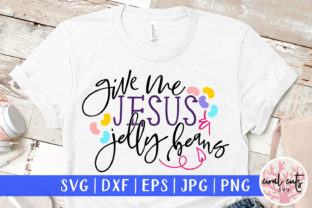
The mood of Give Me Jesus and Jelly Beans is undeniably nostalgic yet fresh. Visually, the layout suggests a hierarchy that works beautifully for embroidery. The typography likely carries the weight of the message, while the jelly bean elements provide necessary negative space and color opportunities. When I evaluate graphics for stitching, I look for "breathability." Designs that are too dense or cluttered often fail on fabric because they create bulletproof patches of thread. This concept, however, implies a scattered or organic arrangement of the candy elements, which is ideal for maintaining fabric drape.
For a handmade product, this visual personality signals warmth. It doesn't scream "mass-produced." Instead, it invites customization. I can immediately envision this as a centerpiece for a sweatshirt embroidery project where the jelly beans could be matched to a customer’s favorite colors or a specific church group’s palette. The duality of the text allows it to function as both a serious statement of faith and a whimsical nod to childhood traditions, making it versatile for various demographics within the craft business community.
Real-World Application: The Easter Tote Test
To truly judge this machine embroidery design, I mentally placed it in a real-life production scenario. Let’s say I am fulfilling a custom order for a set of canvas tote bags intended as Easter basket alternatives for a women’s ministry retreat. Canvas is a forgiving fabric, but it has texture. If I were using Give Me Jesus and Jelly Beans here, I would treat it primarily as an applique design or a mixed-media piece rather than a full-fill stitch design.
In this scenario, the "Jelly Beans" portion of the graphic offers a perfect opportunity for fabric scraps. Using actual printed cotton fabrics for the beans adds a tactile dimension that flat thread cannot achieve. This elevates the perceived value of the finished product. For the text "Give Me Jesus," a clean satin stitch or a textured fill stitch would ensure legibility against the coarse canvas weave. This application highlights why checking your embroidery file compatibility is crucial. Since this item includes SVG and DXF formats for cutter machines, you could easily cut fabric appliqué shapes with a Cricut or Silhouette and then stitch them down with your embroidery machine. This hybrid workflow saves thousands of stitches, reduces production time, and results in a softer, more professional tote bag design.
Technical Considerations and Fabric Limitations
While the aesthetic is charming, practical execution requires caution. Not every surface is friendly to this type of detailed graphic. If you plan to use Give Me Jesus and Jelly Beans on stretchy knits like ribbed baby onesies or lightweight jersey tees, you must be vigilant about stabilization. Intricate lettering combined with small decorative elements can cause puckering if the stitch density isn't managed correctly. Always pair this design with a high-quality cut-away stabilizer for stretch fabrics to prevent distortion after washing.
I would also advise hesitation when applying this to highly textured surfaces like terry cloth towels or chunky knit blankets unless you modify the approach. Small details in the jelly bean graphics might get lost in the pile of the fabric. In these cases, consider using a water-soluble topping to keep the stitches crisp. Furthermore, be mindful of hoop size. If the design is large, resizing it down significantly for a baby embroidery project might render the text illegible. Conversely, scaling it up for a pillow cover might expose gaps in the vector lines if the original digitizing wasn't optimized for larger scales. Always run a sew-out test on scrap fabric that matches your final project's weight and texture before committing to a client order.
Commercial Viability and Brand Consistency
For creative entrepreneurs and digital product sellers, consistency builds trust. Give Me Jesus and Jelly Beans has strong commercial potential because it targets a specific emotional niche. However, your presentation matters as much as the stitch quality. When creating printable mockups or listing photos, ensure the design looks proportional. A common mistake in commercial embroidery listings is showing a digital rendering that looks nothing like the actual stitched output. Because this product provides vector files (SVG/DXF) rather than pre-digitized embroidery formats like PES or DST, you have total control over the final stitch file. This is a massive advantage for brand consistency, as you can tailor the underlay and pull compensation specifically for the garments you sell.
This flexibility also aids in inventory management. You can use the same source graphic to create a patch for hats, a chest logo for tees, and a large back print for sweatshirts, all while maintaining a cohesive brand identity. Just remember to verify licensing terms regarding the sale of finished goods versus the resale of the digital file itself. Protecting your business means respecting intellectual property while maximizing the utility of your design assets.
Essential Designer Notes for Success
Before you load Give Me Jesus and Jelly Beans into your software or onto your machine, run through this practical checklist to ensure professional results:
- Verify File Compatibility: This product includes SVG and DXF files for cutter machines. Confirm whether it also includes native embroidery formats (PES, DST, EXP, etc.) or if you will need to auto-digitize or manually digitize the vectors yourself. Do not assume stitch files are included unless explicitly stated.
- Test Contrast: View the design in black and white before stitching. If the text and the jelly beans rely solely on color contrast rather than value contrast, the design may fail on monochromatic fabrics. Adjust thread colors to ensure readability.
- Check Licensing: Before listing any holiday embroidery items for sale, review the specific license included with the download. Ensure you are cleared for commercial use of finished products.
- Mockup Reality Check: Create a printable mockup using the actual dimensions of the design. Digital previews often make designs appear larger or smaller than they really are relative to a garment.
- Stabilizer Selection: Match your stabilizer to the fabric, not just the design. Lightweight tear-away for woven cottons, cut-away for knits, and adhesive spray for caps or hard-to-hoop items.
- Detail Inspection: Zoom in to 400% in your editing software. Look for overlapping satin stitches or tiny running stitches that might break needles or cause thread nests. Clean up nodes before stitching.
Ultimately, Give Me Jesus and Jelly Beans is a delightful addition to the Crafts category that offers significant versatility for the prepared maker. Whether you are crafting a personalized gift for a grandchild or stocking your Etsy shop for the spring rush, success comes from treating this graphic as a starting point for quality craftsmanship rather than a quick fix. By respecting the technical requirements of embroidery and leveraging the vector flexibility provided, you can turn this charming phrase into a tangible product that resonates deeply with customers and stands the test of wear.